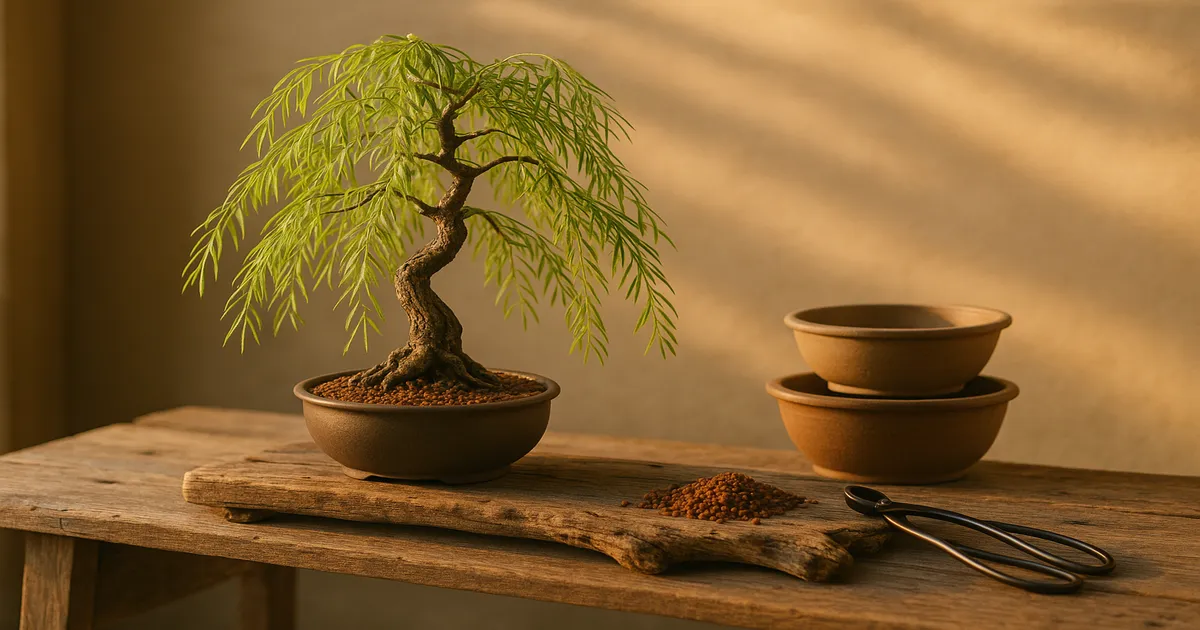
Quick Answer: Willow bonsai are fast-growing, outdoor-only deciduous trees that reward committed growers with graceful weeping forms and rapid development. They need full sun, frequent watering (sometimes twice daily in summer), and a genuine winter dormancy. If you can meet those demands, they’re one of the most forgiving and visually striking bonsai you can grow.
If you’re searching for a willow bonsai tree for sale, the good news is that several species are widely available — from classic weeping willows to the colorful Hakuro-nishiki. The challenge is knowing which species suits your climate, what to look for in a healthy specimen, and how to keep it thriving once it arrives home. This guide covers all of that.
Is a Willow Bonsai Tree Right for You?
Willows (Salix spp.) are among the fastest-growing deciduous bonsai subjects, which cuts both ways. Rapid growth means you can develop structure and ramification in years rather than decades. It also means pruning every two to four weeks during the growing season and checking wired branches weekly to prevent wire bite.
Their native habitat — riverbanks, floodplains, lakeshores — tells you everything about their water needs. These trees are genuinely thirsty, and twice-daily watering in peak summer is not unusual. If you travel frequently or prefer a low-maintenance species, look elsewhere.
What willows offer in return is hard to overstate: elegant weeping silhouettes, bark that furrows beautifully with age, and a forgiving nature that bounces back from hard pruning better than almost any other genus.
Key Facts at a Glance
| Species | Common Name | Hardiness Zone | Difficulty |
|---|---|---|---|
| Salix babylonica | Weeping Willow | USDA 6–9 | Intermediate |
| Salix integra ‘Hakuro-nishiki’ | Dappled Willow | USDA 4–9 | Beginner-friendly |
| Salix matsudana ‘Tortuosa’ | Corkscrew Willow | USDA 5–8 | Intermediate |
| Salix caprea | Pussy Willow | USDA 4–8 | Beginner-friendly |
| Salix repens / S. helvetica | Creeping/Swiss Willow | USDA 4–7 | Intermediate |
Best Willow Bonsai Species to Buy
Salix babylonica – Classic Weeping Willow
This is the willow most people picture: long, sweeping branches cascading toward the ground. In bonsai form it’s typically styled as a cascade or semi-cascade, and it develops impressive trunk girth relatively quickly. Hardy to about 20°F (-7°C), it suits Zones 6–9. It’s widely available online but can be harder to find pre-styled at local nurseries.
Salix integra ‘Hakuro-nishiki’ – Dappled Willow
Arguably the most popular willow bonsai tree for sale at both garden centers and online retailers. New spring growth emerges in shades of pink, cream, and pale green — genuinely striking. It’s compact, hardy to 0°F (-18°C) across Zones 4–9, and tolerates beginner mistakes better than most. Glazed pots in blue or gray complement the foliage beautifully.
Salix matsudana ‘Tortuosa’ – Corkscrew Willow
The twisted, contorted branching of this cultivar gives finished bonsai an almost sculptural drama. It works well in literati and informal upright styles where branch movement can really be appreciated. Hardy to around 10–15°F (-12 to -9°C), it covers Zones 5–8. Less common than Hakuro-nishiki, so specialist bonsai nurseries are your best bet.
Salix caprea – Pussy Willow
Pussy willow earns its place through ornamental catkins that emerge in early spring before the leaves — a genuine seasonal highlight. The bark roughens attractively with age. Hardy to -20°F (-29°C) in Zones 4–8, it’s one of the toughest options for cold-climate growers. Look for it at nurseries in late winter when catkins are forming.
Salix repens & Salix helvetica – Compact Alpine Species
These two are the go-to choices for mame or shohin-scale bonsai. S. helvetica has silvery, almost felted foliage that looks unlike any other willow. Both are hardy to Zone 4 and stay naturally compact, which reduces the constant pruning burden. Expect to source them from dedicated bonsai nurseries rather than general garden centers.
What to Look for When Buying a Willow Bonsai Tree for Sale
Trunk, Taper, and Nebari
A good bonsai trunk should be widest at the base and taper progressively toward the apex. Look for visible surface roots (nebari) radiating outward — this anchors the tree visually and signals genuine development. Avoid trees with a straight, uniform trunk diameter from base to tip; that’s a cutting grown in a nursery tube, not a developed bonsai.
Root and Soil Health
If you can inspect the tree in person, gently probe the soil. It should feel gritty and free-draining, not dense and peat-like. Healthy willow roots are white to tan and firm. Softness or dark discoloration suggests rot. Roots emerging from drainage holes aren’t necessarily a problem — willows fill pots fast — but they do signal an overdue repot.
Buying Online vs. Local Nurseries
Online retailers offer far broader species selection, especially for rarer varieties like S. helvetica or pre-styled S. babylonica cascades. The trade-off is shipping stress: willows arriving by courier may drop leaves temporarily, which is usually cosmetic rather than serious. Buy from reputable sellers who ship with roots wrapped in damp moss and branches secured against movement.
Local nurseries let you inspect before you commit — trunk movement, soil condition, and overall vigor are all visible in person. The species range will be narrower, but you eliminate transit risk entirely.
Red Flags to Avoid
- Yellowing foliage outside of autumn dormancy
- Mushy or waterlogged soil that doesn’t drain
- Wire scars or grooves cut into the bark
- Roots circling densely at the surface with no soil visible
- A tree that wobbles in its pot (unstable root system or recently repotted with damaged roots)
Light, Temperature, and Placement
Willow Bonsai Must Live Outdoors
This is the most common misconception among new buyers. Willow bonsai cannot live indoors permanently. They are deciduous trees that require a genuine cold dormancy each winter. Skip that dormancy for a year or two and the tree will slowly decline — weakening growth, increased pest susceptibility, eventual death. A brief indoor display for a week or two is fine, but a windowsill is not a home for this tree.
Sunlight and Winter Protection
Willows need a minimum of six hours of direct sun daily, with eight to ten hours preferred during active growth. In Zone 9 and warmer, afternoon shade after 2:00–3:00 PM prevents leaf scorch during peak summer heat.
The pot is always more vulnerable than an in-ground tree. Roots in a ceramic container can freeze solid when temperatures that an in-ground willow would shrug off become lethal to a bonsai. Protect your tree when temperatures drop below 20°F (-7°C) for extended periods.
Safe winter storage options:
- Unheated garage or shed: Ideal. Keep temperatures between 25–40°F (-4–4°C) and provide some light — even a north-facing window beats complete darkness.
- Cold frame with frost cloth: Good for milder winters; watch for temperature spikes on sunny days.
- Deep mulching in a sheltered spot: Works in Zones 6+ for hardy species like S. caprea and ‘Hakuro-nishiki’.
Do not store in a heated room. Temperatures above 50°F (10°C) trigger premature bud break, exhausting the tree before spring conditions can support growth.
Soil, Watering, and Feeding
Best Soil Mix for Willow Bonsai
Willows tolerate more moisture retention than most bonsai species, but standing water and anaerobic conditions will still rot roots. This mix balances retention with drainage:
| Component | Proportion | Function |
|---|---|---|
| Akadama | 40–50% | Water retention, root support |
| Pumice | 25–30% | Drainage and aeration |
| Lava Rock | 20–25% | Long-term structure, prevents compaction |
Use 3–6mm particle size for standard trees; 1–3mm for mame and shohin scale. A pre-blended inorganic mix works well if you’d rather not source components separately. (Bonsai Jack Gritty Mix #111) Avoid peat-based mixes entirely — they compact, retain too much water, and break down into anaerobic sludge.
Watering by Season
- Summer: Once or twice daily. Water thoroughly until it flows freely from the drainage holes.
- Spring and autumn: Once daily, or every other day as temperatures cool.
- Winter (dormancy): Every 7–14 days — just enough to prevent complete desiccation.
Water when the top 0.5 inch (1.2 cm) of soil begins to dry. Unlike most bonsai, willows should never be allowed to dry out completely.
Fertilizing
Feed with a balanced fertilizer (e.g. 10-10-10 or similar) every two weeks from bud break through midsummer. Switch to a low-nitrogen, high-phosphorus and potassium formula (e.g. 0-10-10) from late summer through early autumn to harden growth before dormancy. Suspend feeding entirely once the tree drops its leaves.
Pruning and Wiring
Maintenance Pruning
During the growing season, prune every two to four weeks. Once new shoots extend to four to six leaves, cut back to one or two. This repeated cutback builds the dense ramification that defines a great bonsai. Willows bud back readily from old wood, so don’t be timid — hard pruning is rarely a problem with this genus.
The best window for major structural work is late winter, just before buds begin to swell. Remove water shoots, downward-growing branches, crossing branches, and anything that disrupts the overall design. A secondary structural pruning can follow in late spring once the first growth flush has hardened off.
Apply cut paste immediately to any cut larger than 0.25 inch (6mm) in diameter. Concave cutters create a slightly hollowed wound profile that heals flush rather than leaving a raised knob.
Wiring
Aluminum wire suits willows well — the wood is relatively soft and aluminum is forgiving for beginners. Use copper only on thick trunks or major branches where greater holding power is needed.
| Branch Diameter | Wire Gauge | Type |
|---|---|---|
| Under 2mm | 1.0–1.5mm | Aluminum |
| 2–4mm | 2.0–2.5mm | Aluminum |
| 4–8mm | 3.0–4.0mm | Aluminum |
| 8–15mm | 4.0–5.0mm | Aluminum or Copper |
| Trunk/major branches | 5.0–6.0mm | Copper |
Wire in late winter before bud break when bare branches make structure easy to read. Wrap at a 45-degree angle to the branch axis and anchor at the trunk before working outward. Where possible, use one wire to secure two branches of similar diameter.
Critical warning: Wire can bite into willow bark within four to eight weeks during the growing season. Check wired branches every single week in spring and summer. The moment bark begins to bulge around the wire, cut it off immediately — never unwind it. If wire has already bitten in, remove it, apply cut paste to the groove, and let the wound heal before re-wiring.
Repotting
How Often and When
- Young/developing trees: Every 1–2 years
- Mature trees: Every 2–3 years
- Large, old specimens: Every 3–5 years
Repot in early spring, just as buds begin to swell but before they open. Late summer works as a secondary window if you missed spring — allow at least six weeks before your first frost. If soil is drying out unusually quickly or roots are circling the base of the pot, repot regardless of schedule.
Root Pruning Steps
- Remove the tree from its pot; use a chopstick to free roots from pot walls if root-bound.
- Comb out the root mass with a root rake, working from the outside inward.
- Remove circling roots and any growing straight down.
- Prune with sharp, clean scissors — clean cuts heal far better than torn roots.
- Remove no more than 25–30% of the root mass from an established tree (up to 40% for vigorous young trees).
- Keep the process under 10–15 minutes; mist roots with water if you need more time.
- Repot into fresh soil, water thoroughly, and place in light shade for one week before returning to full sun.
Willows prefer slightly deeper pots than many species — their vigorous root systems benefit from the extra depth. For weeping styles, a deep cascade pot suits the design. For upright styles, oval or rectangular pots in proportion to the canopy work well.
Troubleshooting Common Problems
Yellowing or dropping leaves: Check soil moisture first. Yellowing lower leaves with wet soil points to overwatering or root rot; yellowing with bone-dry soil is underwatering. If moisture is fine, consider whether the tree is getting enough light.
Weak, leggy growth: Almost always a light problem. Move the tree to a position with at least six to eight hours of direct sun. Leggy internodes are the tree’s response to reaching for light, and no amount of pruning will fix it if the underlying cause isn’t addressed.
Root rot: If you find dark, mushy roots during repotting, trim all affected roots back to clean tissue, dust cut surfaces with powdered sulfur or cinnamon, and repot into fresh, well-draining soil. Increase the pumice and lava rock ratio and ensure pots are elevated on feet to allow free drainage.
Wire damage: Wire scars on willows can be significant because the wood is soft and growth is fast. Apply cut paste to the groove immediately. Shallow scars will callus over within one to two growing seasons; deep grooves may leave permanent marks but rarely threaten the tree’s health.
Frequently Asked Questions
Can I keep a willow bonsai indoors? No — not permanently. Willows are deciduous trees that need cold winter dormancy to survive long-term. Brief indoor display (up to two weeks) is fine, but a heated room year-round will weaken and eventually kill the tree.
How fast does a willow bonsai grow? Very fast compared to most bonsai species. During the growing season, new shoots can extend several inches in a week. Expect to prune every two to four weeks and check wire every seven days to prevent bite.
Which willow bonsai tree is best for beginners? Salix integra ‘Hakuro-nishiki’ is the most forgiving option. It’s compact, cold-hardy across Zones 4–9, widely available for sale, and recovers well from beginner mistakes. Salix caprea is a close second for growers in colder climates.
Why are my willow bonsai leaves turning yellow? The three most common causes are overwatering, underwatering, and insufficient light. Check soil moisture first, then evaluate sun exposure. Yellowing that starts on lower, older leaves with wet soil usually signals root rot; yellowing with dry soil signals drought stress.
How do I find a reputable willow bonsai tree for sale online? Look for sellers who photograph individual trees rather than stock images, describe the species and age clearly, and ship with roots wrapped in damp moss. Established bonsai-specific retailers generally offer better-quality stock and safer packaging than general plant marketplaces.