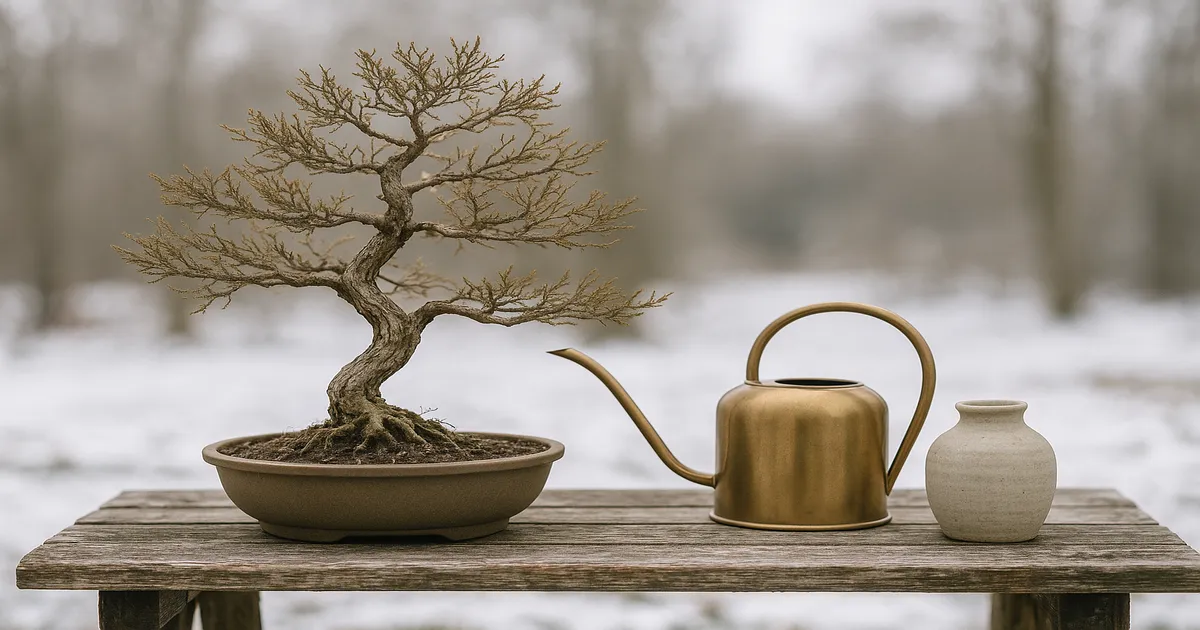
Quick Answer: Juniper bonsai still need water in winter, but far less often than during the growing season — typically every 5 to 28 days depending on where you’re storing the tree. Never water frozen soil, and always check moisture before watering rather than following a fixed schedule.
Knowing how often to water juniper bonsai in winter is one of those things that trips up beginners and experienced growers alike. Water too much and you risk root rot in cold, slow-evaporating soil. Water too little and the tree quietly desiccates while you assume it’s safely dormant. Once you understand what junipers are actually doing in winter, though, the whole thing becomes much simpler.
Juniper Bonsai Winter Watering: A Quick Guide
Junipers are not fully dormant in winter. Botanists call them facultatively dormant — metabolic activity drops dramatically but never stops. Your tree still loses moisture through its foliage and still needs water to keep the vascular tissue alive. Because uptake is so slow, however, overwatering becomes the bigger risk.
Here’s a rough frequency guide by storage situation:
| Storage Situation | Temperature Range | Watering Frequency |
|---|---|---|
| Unheated garage or shed | 20–40°F (-7 to 4°C) | Every 2–4 weeks |
| Cold frame / unheated greenhouse | 28–45°F (-2 to 7°C) | Every 10–21 days |
| Outdoor, mild climate (Zones 7–9) | 28–55°F (-2 to 13°C) | Every 5–14 days |
| Outdoor, cold climate (Zones 5–6) with protection | 15–35°F (-9 to 2°C) | Every 3–5 weeks |
In summer, heat drives rapid evaporation and your tree actively pulls water through its roots. In winter, both processes slow to a crawl. Wet soil stays wet far longer, and anaerobic conditions — the kind that rot roots — can develop quickly. Treat the ranges above as prompts to go and check, not automatic triggers to water.
How Cold Affects Your Juniper’s Water Needs
Why Junipers Still Need Water in Winter
A fully dormant tree, like a bare-branched maple, has essentially shut down for the season. Junipers don’t do that. Below 40°F (4°C) their metabolic rate drops sharply, but the vascular cambium stays alive and the foliage continues to transpire. They need less water — but never zero.
Juniper foliage is covered in a waxy cuticle that limits moisture loss, which is part of why the species is so well-adapted to cold, dry winters in its native habitat. That cuticle reduces transpiration but doesn’t stop it. On a dry, windy winter day, a juniper can lose meaningful amounts of moisture through its foliage even when temperatures are well below freezing.
Why Container Bonsai Are More Vulnerable Than In-Ground Trees
A juniper planted in the ground has its roots insulated by a large mass of soil that freezes slowly and holds temperature. A bonsai pot is small and exposed on all sides — it can freeze solid overnight. Juniper roots are also roughly 10–15°F (5–8°C) less cold-hardy than the foliage, making the root system the weak point. Protecting the root zone from freeze-thaw cycling is the primary purpose of winter storage.
How Often to Water Juniper Bonsai in Winter by Storage Type
Unheated Garage or Shed (Most Recommended)
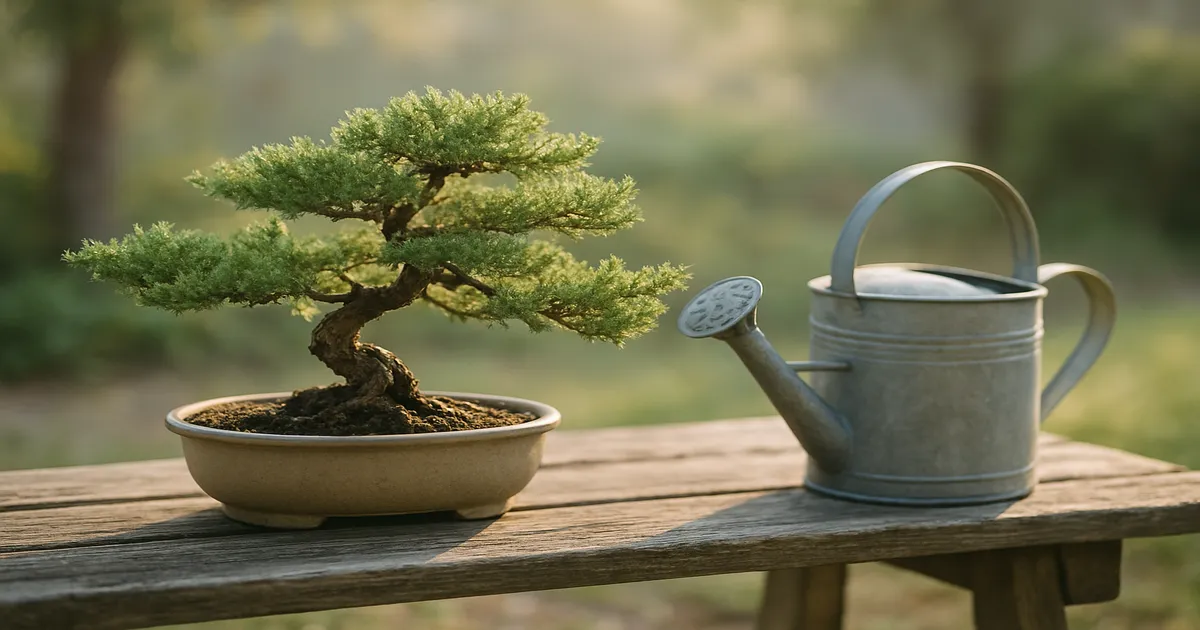
For most temperate climates, an unheated garage or shed is the gold standard. Temperatures stay in the 20–40°F (-7 to 4°C) range, desiccating winds are blocked, and repeated freeze-thaw cycles that stress roots are avoided. At these temperatures, water roughly every 2–4 weeks. Check soil moisture weekly, but don’t water just because two weeks have passed — check first.
Position the tree near a window if possible. Even low winter light helps maintain foliage health during storage.
Cold Frame or Unheated Greenhouse
A cold frame offers slightly more frost protection and often runs a few degrees warmer than an open garage. That warmer environment means a slightly higher metabolic rate, so water every 10–21 days and monitor more closely. Watch for temperature spikes on sunny winter days — a cold frame can reach 60°F (16°C) or higher inside, which risks pushing the tree toward premature bud break.
Outdoor Storage in Mild Climates (Zones 7–9)
Where winter temperatures rarely drop below the mid-20s°F (-4°C), junipers can often stay outside with basic root protection. Sink the pot into the ground or pack it with straw or mulch to insulate the root zone. Natural rainfall will supplement your watering, so check soil moisture every 5–14 days. On dry stretches, you may need to water even if it rained recently — rainfall doesn’t always penetrate a dense bonsai canopy.
Outdoor Storage in Cold Climates (Zones 5–6) with Protection
In harsher climates, outdoor storage is possible for cold-hardy species like Juniperus scopulorum or J. procumbens ‘Nana’, but the root zone needs serious insulation. Wrap pots in burlap, surround them with mulch, or sink them into a cold frame. Soil may be frozen solid for weeks at a time — during those stretches, watering is neither possible nor necessary. When a thaw arrives, check moisture and water thoroughly if the soil is dry. Expect to water every 3–5 weeks at most.
How to Check Soil Moisture in Winter
The Chopstick Method
This is the most reliable technique in any season.
- Insert a wooden chopstick about 2 inches (5 cm) into the soil.
- Leave it for 60 seconds.
- Withdraw it and examine the tip.
- Soil particles clinging to the wood = moisture present; don’t water yet.
- Dry and clean = soil is drying out; time to water.
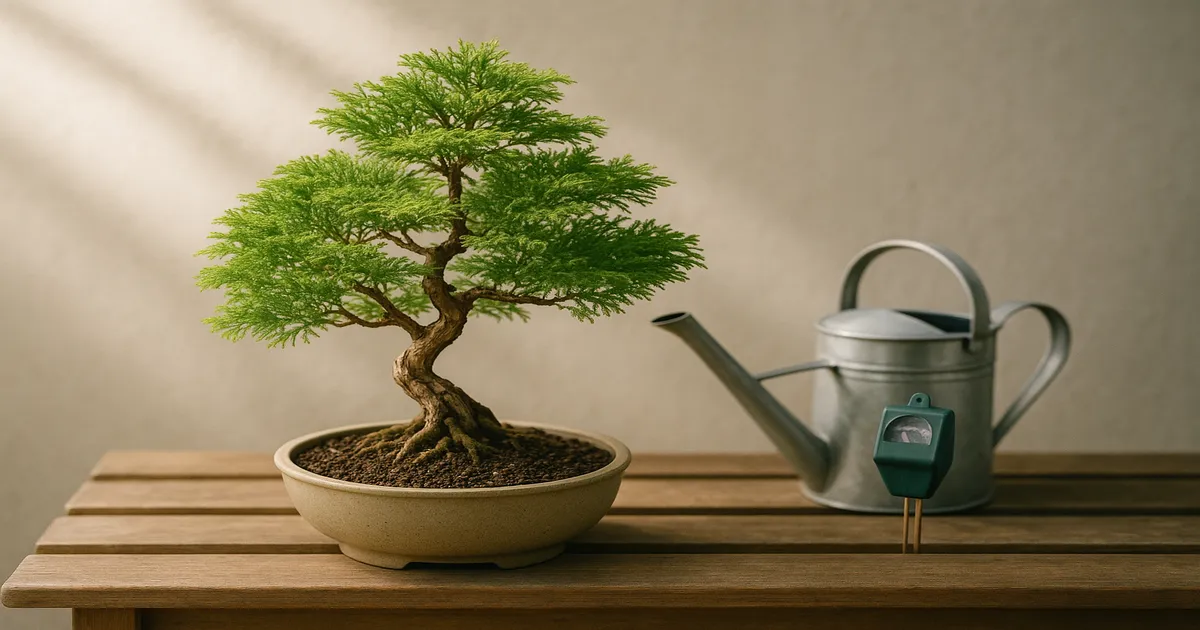
If you prefer a more precise reading, a dedicated moisture meter takes the guesswork out entirely.
The Pot-Lift Method
Pick up the pot and note how it feels. A pot that feels noticeably lighter than usual is telling you the soil has dried out. This gets easier with practice — after a few weeks with the same tree, you’ll develop a reliable feel for the difference between dry and freshly watered.
Critical Winter Watering Rules
Never water frozen soil. Frozen soil cannot absorb water. If you water anyway, it pools on the surface or runs around the outside of the frozen root ball. When it thaws, that pooled water creates ideal conditions for root rot. If your chopstick won’t penetrate more than half an inch, the soil is frozen — wait.
Water during the warmest part of the day. Aim for 10 AM to 2 PM. This gives water time to penetrate and drain before nighttime temperatures drop and refreeze the pot.
Always water thoroughly. Light surface watering is worse than not watering at all. It encourages shallow root development and leaves the deeper root zone dry. Water until it drains freely from the drainage holes, then stop.
After a prolonged cold snap, don’t assume the soil is fine. Wait for temperatures to rise above freezing for a few hours, check with your chopstick, and water thoroughly during the warmest part of the day if the soil is dry.
Recognising Overwatering vs. Underwatering in Winter
Signs of Too Much Water
- Foliage yellowing or browning from the interior of the tree outward
- Soft or mushy feel at branch tips
- Soil that stays wet for extended periods between checks
- A sour or anaerobic smell from the soil
- White fungal growth on the soil surface
If you see several of these together, move the tree somewhere it can drain properly and hold off watering until the soil dries significantly.
Signs of Too Little Water
- Browning that starts at foliage tips and works inward
- Dry, crispy texture when you touch the foliage
- Foliage losing its waxy blue-green sheen, appearing dull
- Pot feeling very light when lifted
- Soil pulling away from the inner edges of the pot
Winter Burn: Desiccation from Wind
Winter burn is a specific desiccation injury that looks slightly different from regular underwatering. Cold, drying winds pull moisture from the foliage faster than frozen roots can replace it, turning whole sections of the tree reddish-brown — even when the soil has adequate moisture. The best cure is prevention: position trees out of prevailing winds, and apply an anti-desiccant spray to the foliage in late autumn while temperatures are still above 40°F (4°C). (Wilt-Pruf Concentrate 32oz)
Soil Composition and Winter Watering
The soil you use directly determines how often you need to water and how much margin for error you have. In summer, even a moderately water-retentive mix dries out quickly in the heat. In winter, that same soil can stay wet for weeks, creating anaerobic conditions that suffocate roots.
The professional standard for juniper bonsai is an inorganic mix of roughly 40% akadama, 30% pumice, and 30% lava rock, with particle sizes of 3–6 mm for most bonsai. This drains freely, holds just enough moisture, and doesn’t compact over time. Avoid pure peat, standard potting compost, or any mix with high organic content — these stay wet far too long when evaporation is slow.
If you’re repotting in spring and know the tree will spend winter in a garage or cold frame, consider increasing the inorganic content to 60–70% by reducing akadama and increasing pumice and lava rock. The lower water retention gives you more buffer against overwatering during the slow winter months.
Winter Storage: Setting Up for Success
You are not trying to keep your juniper warm. You are trying to prevent lethal temperature extremes and desiccating winds while allowing the tree to experience genuine cold dormancy. A juniper that spends winter in a heated living room will likely decline within a few years — not from cold, but from disrupted dormancy, insufficient light, and low humidity.
Keeping junipers in a heated space above 50°F (10°C) also disrupts dormancy and causes the tree to burn through moisture faster, so you’ll find yourself watering every week or two during what should be the slowest period of the year. If you want to bring a juniper inside for display, limit it to one to three days, then return it to its proper winter home.
Avoid storing pots in low spots where meltwater collects — a root zone sitting in pooled water for days is a reliable recipe for rot.
Frequently Asked Questions
Can you overwater a juniper bonsai in winter?
Yes — and it’s actually easier to overwater in winter than in summer. Cold temperatures dramatically slow evaporation, so wet soil stays wet far longer. Anaerobic conditions develop quickly, root rot sets in, and by the time symptoms appear in the foliage, the damage is often severe. Always check soil moisture before watering, and when in doubt, wait another few days.
Should I water my juniper bonsai if it’s stored in an unheated garage?
Yes, but infrequently. A juniper in an unheated garage at 20–40°F (-7 to 4°C) typically needs water every 2–4 weeks. Check soil moisture weekly using the chopstick method, and only water when the soil is genuinely dry. Water thoroughly during the warmest part of the day.
What happens if a juniper bonsai dries out completely in winter?
Complete desiccation is a serious problem even in dormancy. The vascular cambium and fine root tips need some moisture to survive. A tree that dries out completely may lose branches or die entirely, and the damage often isn’t visible until spring when the tree fails to push new growth. If you find a completely dry tree, water it thoroughly and move it somewhere slightly warmer temporarily to encourage absorption.
How do I know if my juniper bonsai needs water in winter?
The most reliable methods are the chopstick test (insert 2 inches into the soil, leave 60 seconds — dry and clean means water is needed) and the pot-lift test (a noticeably light pot signals dryness). Visual cues like foliage losing its waxy sheen or tips starting to look slightly crispy are secondary indicators.
Is it normal for juniper bonsai foliage to turn brown in winter?
A subtle shift toward bronze or olive-green is normal — many junipers naturally tint in cold weather and green up again in spring. However, brown foliage that feels dry and crispy, especially starting at the tips and working inward, signals underwatering or winter burn. Reddish-brown discoloration on windward-facing foliage is a classic sign of wind desiccation. If browning comes from the interior of the tree outward, check for overwatering instead.