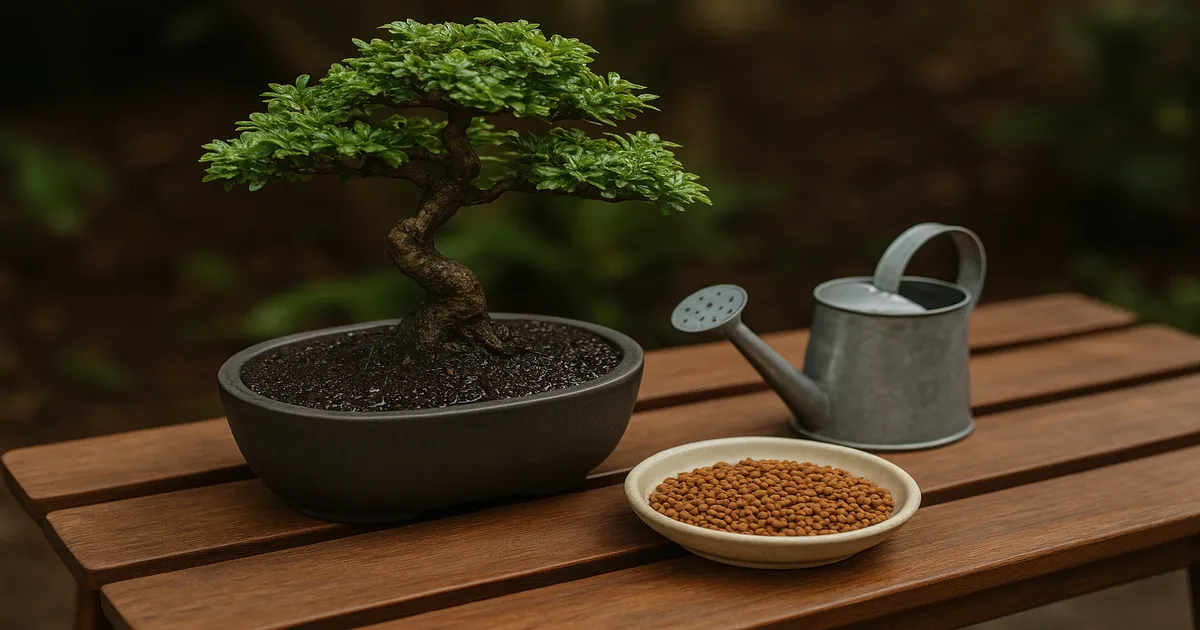
Quick Answer: Yes, you can overwater a bonsai tree — and it’s one of the most common reasons bonsai die. Waterlogged soil starves roots of oxygen, triggering root rot that can kill a tree within weeks. The good news: the risk depends heavily on your soil mix, species, pot size, and season, and it’s entirely preventable once you understand the key factors.
Overwatering a bonsai tree is easier than most beginners expect, and it’s rarely as simple as “I watered too often.” The real culprit is almost always a combination of poor-draining soil, low light, and a fixed watering schedule applied regardless of conditions. This guide covers everything you need — from spotting symptoms early to saving a tree that’s already in trouble.
Can You Overwater a Bonsai Tree? (The Full Answer)
Yes — definitively. Waterlogged soil suffocates roots by displacing the oxygen they need to function. When roots can’t breathe, they begin to rot, and a rotting root system can no longer deliver water and nutrients to the canopy. The cruel irony is that an overwatered bonsai often looks like it needs more water, which makes the problem worse.
Root rot is insidious because it develops underground, out of sight, while the tree may look fine above the soil for weeks. By the time you see wilting or branch dieback, significant root damage has often already occurred. The risk varies by species, soil type, pot size, season, and whether your tree lives indoors or out — all covered in detail below.
Which Bonsai Species Are Most at Risk?
High-Risk: Juniper, Jade, and Fukien Tea
Junipers are drought-adapted conifers from rocky, fast-draining hillsides — they evolved to handle dry spells, not soggy pots. Watering them on the same schedule as other plants is a reliable way to kill them. Jade (Crassula ovata) stores water in its leaves and is genuinely intolerant of consistently wet soil. Fukien Tea (Carmona retusa) is particularly vulnerable indoors, where low light and slow evaporation compound the risk significantly.
Moderate-Risk: Ficus, Japanese Maple, and Chinese Elm
These species are more forgiving but not immune. Japanese Maple prefers moist, well-drained conditions — consistent moisture is fine, waterlogged roots are not. Ficus and Chinese Elm sit in a similar middle ground: they like regular watering but will develop root rot in poorly draining soil.
Low-Risk Species That Tolerate Wet Conditions
A handful of species genuinely prefer consistently moist or even wet soil:
- Bald Cypress (Taxodium distichum) — native to southeastern U.S. wetlands; overwatering is rarely a concern
- Willow (Salix spp.) — riverbank natives with enormous water demands; underwatering is the real danger
- Dawn Redwood (Metasequoia glyptostroboides) — prefers moist valley-floor conditions; handles more water than most bonsai
The mental model worth internalising: where a species evolved tells you how it handles water. A juniper from a rocky alpine slope and a bald cypress from a Louisiana swamp have completely different expectations. Before adjusting your watering routine, look up the native habitat — it tells you more than any generic watering chart.
How to Recognise an Overwatered Bonsai Tree
Early Warning Signs
Catching overwatering early makes recovery dramatically easier. Watch for:
- Soil that stays wet more than 3–4 days after watering
- Moss or algae colonising the soil surface
- Yellowing leaves, starting with older, lower foliage first
- Leaves that feel soft or limp even though the soil is wet
- A musty or sour smell from the pot
Advanced Symptoms: When Root Rot Has Set In
- Wilting despite wet soil — the most critical and most misread sign
- Branch dieback progressing from the tips inward
- Bark at the base of the trunk turning dark, soft, or mushy
- White or gray mold on the soil surface
- Out-of-season leaf or needle drop
Wilting with wet soil is a red flag. It means roots have rotted to the point where they can no longer transport water upward. Do not water more — unpot the tree and inspect the roots immediately.
Overwatering vs. Underwatering: How to Tell the Difference
| Symptom | Overwatering | Underwatering |
|---|---|---|
| Soil condition | Wet or persistently damp | Bone dry, shrinking from pot edges |
| Leaf texture | Soft, limp, yellowing | Crispy, brown-edged, curling |
| Leaf drop | Soft yellow leaves fall | Dry brown leaves fall or cling |
| Branch tips | Die back, may show mold | Dry, brittle, snap cleanly |
| Bark condition | Soft, dark, possibly mushy | Dry, may crack or shrivel |
| Recovery speed | Slow — root damage present | Fast if caught early |
The Real Cause of Overwatering: Soil and Drainage
Why Soil Composition Matters More Than Watering Frequency
Here’s the reframe that changes everything: overwatering is fundamentally a soil and drainage problem. A bonsai in a fast-draining inorganic mix can be watered every single day without harm. The same tree in a dense organic potting mix can develop root rot from watering every three days. Frequency matters far less than what happens to the water after it enters the pot.
Ideal Bonsai Soil: Akadama, Pumice, and Lava Rock
The standard mix used by most serious bonsai growers is a 1:1:1 ratio of akadama, pumice, and lava rock.
- Akadama — fired Japanese clay that retains just enough moisture while draining freely; breaks down after 2–3 years and needs replacing
- Pumice — volcanic glass that improves drainage and aeration without breaking down
- Lava rock — porous volcanic rock that anchors roots and keeps the mix open
Sift out fine particles before use — dust fills air pockets, blocks drainage holes, and creates the anaerobic conditions root rot thrives in. Aim for a particle size of 3–6mm for most bonsai.
Species-specific adjustments:
- Moisture-sensitive species (juniper, pine, jade): Reduce akadama to 25% and increase pumice to 40–50% for maximum drainage
- Moisture-loving species (Japanese maple, bald cypress): Increase akadama to 50–60%, with 20–25% pumice and 20% lava rock
- Tropical indoor species (ficus, Fukien Tea): A 40:30:30 akadama, pumice, lava rock mix works well; some growers add 10% coarse horticultural grit
Standard potting mix and garden soil are the biggest culprits behind overwatered bonsai. They compact around roots, eliminate air pockets, and hold water far longer than roots can tolerate. Peat-based mixes are similarly problematic — they hold water excessively and become nearly hydrophobic when dry. Neither belongs in a bonsai pot.
How Often Should You Water a Bonsai Tree?
Check Soil Moisture, Not the Calendar
Water when the top 0.5–1 inch of soil begins to dry out — not on Tuesday because that’s watering day. Seasons change, weather changes, growth rates change. A schedule that works in July will almost certainly overwater your tree in December.
Four practical ways to test soil moisture:
- Finger test: Push your finger 0.5–1 inch into the soil. Slightly moist? Wait. Dry? Water thoroughly.
- Chopstick method: Insert a wooden chopstick 1–2 inches deep. If soil particles cling when you pull it out, moisture is still present.
- Weight method: Lift the pot right after watering, then again when dry. The difference becomes intuitive quickly.
- Moisture meter: Water when the reading drops to 3–4 on a 1–10 scale — useful while building intuition.
When you do water, go slowly and thoroughly until water flows freely from every drainage hole. Never leave a bonsai sitting in a saucer of standing water.
Seasonal Watering Frequency Guidelines
| Season | Outdoor Temperate | Indoor Tropical |
|---|---|---|
| Spring (active growth) | Once to twice daily | Every 2–4 days |
| Summer (peak heat) | Twice daily possible | Every 2–3 days |
| Autumn (slowing growth) | Every 1–2 days | Every 3–5 days |
| Winter (dormancy) | Every 5–14 days | Every 5–7 days |
These are starting points — always check the soil first.
Outdoor bonsai benefit from sunlight, wind, and temperature fluctuations that accelerate drying. Indoor bonsai have none of those advantages, making them significantly more prone to overwatering. If your ficus or Fukien Tea lives on a windowsill, it probably needs water far less often than you think.
Winter dormancy is a high-risk period. Outdoor deciduous bonsai slow their metabolism dramatically and may need 50–70% less water than in summer. Watering a dormant maple on a summer schedule is one of the most common causes of winter root rot.
How to Save an Overwatered Bonsai Tree
Step 1: Confirm the Problem
Check the soil — is it consistently wet days after watering? Smell it — musty or sour? If you suspect root rot, gently unpot the tree. Healthy roots are white to tan and firm. Rotted roots are brown to black, mushy, and may disintegrate when touched.
Step 2: Treat the Roots
- Remove all mushy, brown, or black roots with clean, sharp scissors or root shears
- Cut back to healthy white or tan tissue
- Rinse the root mass gently with water
- Treat cut surfaces with diluted hydrogen peroxide (3% solution mixed 1:1 with water) or a copper-based fungicide
- Repot immediately into fresh, fast-draining inorganic soil
Step 3: Prune the Canopy to Match
A damaged root system can’t support the same canopy it once did. If you removed roughly 30% of the root mass, reduce the canopy by a similar proportion — removing weak, dying, or crossing branches first. Apply wound paste to any cut larger than 5mm.
Step 4: Adjust Conditions and Monitor Recovery
Place the recovering tree in bright, indirect light — full sun stresses a tree with a compromised root system. Hold off on fertiliser completely until you see clear new growth; feeding a stressed tree pushes it to grow when it lacks the root capacity to support it. Recovery typically takes 4–12 weeks. Be patient, keep checking the soil, and resist the urge to water on a schedule.
Factors That Increase Overwatering Risk
Low light slows photosynthesis, which slows water uptake, which means soil stays wet longer. A watering schedule that works on a sunny south-facing windowsill in June becomes dangerous when the tree moves to a dim corner in November. Jade plants are especially vulnerable — in low light, their already-slow water consumption drops further.
Cold temperatures reduce metabolic rate and water absorption across all species. Key temperature ranges to know:
- Juniper: Active growth 50–85°F (10–29°C); cold significantly slows water uptake
- Japanese Maple: Ideal 60–75°F (15–24°C); hardy to -10°F (-23°C) with protection
- Ficus: Minimum 55°F (13°C); ideal 65–85°F (18–29°C); cold drafts trigger leaf drop and sharply reduce water uptake
- Jade: Ideal 65–75°F (18–24°C); below 50°F (10°C), water needs drop dramatically
- Chinese Elm: Ideal 50–80°F (10–27°C); hardy to 15°F (-9°C)
A tropical ficus sitting near a drafty window in winter may need water half as often as it does in summer — even though it’s technically indoors year-round.
Pruning a Bonsai Recovering From Overwatering
Remove dead and dying branches promptly — dead wood harbours fungal disease and draws energy a stressed tree desperately needs elsewhere. Use clean, sharp tools and cut just outside the branch collar.
This is not the time for a dramatic redesign. A tree recovering from overwatering heals wounds more slowly and is more vulnerable to infection. Wait at least 4–6 weeks after correcting conditions and seeing healthy new growth before any significant structural work. Avoid wiring until the tree shows vigorous recovery — stressed bark is more fragile and more prone to wire damage.
Frequently Asked Questions
What does an overwatered bonsai tree look like?
Early signs include yellowing leaves (starting from older, lower foliage), soft or limp leaves despite wet soil, and a musty smell from the pot. As the problem progresses, you’ll see branch dieback from the tips inward, mold on the soil surface, and dark or mushy bark at the base of the trunk. The most alarming sign is a wilting tree with wet soil — that indicates advanced root rot.
Can an overwatered bonsai tree be saved?
Yes, if caught early enough. Unpot the tree, cut away all rotted roots, treat with diluted hydrogen peroxide or fungicide, and repot into fast-draining soil. Reduce the canopy proportionally to root mass lost, move to bright indirect light, and stop fertilising until new growth appears. Trees with severe root rot have a lower survival rate, but many recover with prompt treatment.
How do I know if my bonsai has root rot?
The only reliable way is to unpot the tree and examine the roots directly. Healthy roots are white to tan and firm. Rotted roots are brown to black, mushy, and fall apart when touched — and the root mass will smell foul. If the soil has been consistently wet and the tree is wilting or dropping leaves out of season, root rot is the likely cause.
How often should I water a bonsai tree?
There’s no single correct frequency — it depends on species, soil type, pot size, season, and environment. Check the top 0.5–1 inch of soil daily and water only when it begins to dry out. As a rough guide, outdoor temperate bonsai may need water once or twice daily in summer and every 5–14 days in winter; indoor tropical species typically need water every 2–7 days depending on conditions.
Is it better to overwater or underwater a bonsai?
Neither is good, but underwatering is generally easier to recover from if caught quickly. A slightly dry bonsai can often be revived with a thorough watering within hours. Overwatering causes root rot — structural damage that takes weeks or months to recover from, and in severe cases is fatal. When in doubt, check the soil before watering rather than guessing in either direction.